Category: Industry Insights

Podcast: Mastering Payouts & How Vertical SaaS Platforms Can Take Control and Unlock New Revenue Streams

As embedded finance continues to evolve, more software platforms are integrating payment acceptance to create new revenue streams. However, many businesses overlook the potential in payouts – a critical yet often misunderstood component of payments infrastructure. In the second episode of Payabli’s series with the Leaders in Payments Podcast hosted by Greg Myers, our co-founders and co-CEOs, Will Corbera and Jo Phillips, dive into why payouts are becoming the next frontier for SaaS platforms and how businesses can capitalize on this shift.

Why Payouts Matter

Most software companies understand the value of embedding payment acceptance, but payouts remain an afterthought. Traditionally, payouts have been viewed as a simple settlement function—sending funds to merchants, gig workers, or vendors. However, Payabli takes a different approach, treating payouts as a fully embedded payables solution that enables SaaS platforms to streamline money movement and unlock new revenue.

Many businesses still issue thousands of manual checks each month, creating inefficiencies, delays, and unnecessary operational costs. Automating this process through a unified API eliminates these bottlenecks while improving vendor relationships and compliance.

How SaaS Companies Can Monetize Payouts

One of the biggest takeaways from the conversation was that payouts can be a major revenue driver—sometimes even exceeding payment acceptance. This is achieved through:

  • Virtual card issuance – Vendors are paid using virtual cards, generating interchange revenue when the payment is processed.
  • Enhanced ACH transactions – Faster and more reliable ACH payments can be monetized as part of an embedded solution.
  • On-demand payouts – Real-time disbursements provide flexibility for businesses while opening new revenue opportunities.

The Shift Toward Embedded Payouts

To fully embed payouts, SaaS platforms must think beyond traditional accounts payable solutions. Payabli follows what they call the Three P’s of Embedded Payments:

  • Pay In – Payment acceptance and acquiring
  • Pay Out – Vendor, supplier, and contractor payments
  • Pay Ops – Payment operations and infrastructure

This comprehensive approach allows SaaS companies to own the full money movement experience rather than relying on multiple third-party providers. By integrating both pay-in and pay-out functionality, businesses create a seamless financial ecosystem that increases platform stickiness and retention.

Security, AI, and the Future of Payouts

As payouts scale, security and risk management become even more critical. Payabli is investing heavily in AI-driven fraud detection, using:

  • Dynamic risk scoring to assess vendor trustworthiness
  • Automated payment decisioning to ensure compliance
  • Real-time monitoring to prevent fraudulent transactions

With faster payments come higher security risks, making AI a necessary tool for safeguarding transactions. The next phase of embedded payouts will likely include even more advanced fraud prevention and compliance automation.

Looking Ahead

Payouts are no longer just a back-office function—they are a key part of embedded finance that software companies can use to drive efficiency, improve vendor relationships, and unlock new revenue. As the industry moves toward a fully embedded payments experience, companies that embrace both money in and money out will have a significant competitive advantage.

For software platforms looking to expand their financial capabilities, the opportunity in payouts is clear. The question is: are you ready to capitalize on it?

Watch the podcast here:

To learn more about Payabli’s offerings and what’s coming next, stay tuned for the next episodes in this series, which will explore Pay Ops.

Interested in learning more about our Pay Out offering? 

Schedule a demo with one of our payment experts today.

Interchange Optimization for SaaS: Maximizing Margins with Smarter Payments

Embedding payments into software platforms has never been easier, but many providers fail to offer the tools and strategies needed for interchange optimization, which is crucial for maximizing margins and optimizing payment portfolios. For platforms monetizing payments, reducing interchange fees through strategic optimization is essential for driving profitability and staying competitive.

Embedded payment providers should do more than just process transactions—they should empower software platforms to maximize their margins. In this blog, we’ll explore how software companies can unlock additional revenue through interchange optimization, covering essential tools, techniques, and strategies for success.

What Is Interchange in the Context of Software Platforms?

Interchange refers to the fees paid by merchants to card-issuing banks every time a credit or debit card transaction is processed. These fees are typically a percentage of the transaction amount, plus a fixed fee, and they form a significant portion of the overall cost of accepting payments.

For software platforms offering embedded payments, interchange is a critical cost factor that directly impacts profitability. While interchange is often seen as a fixed cost, the reality is that it can vary based on several factors, including the type of transaction, the merchant’s category, and the data provided during processing.

Optimizing interchange is especially important for software platforms that monetize payments. By lowering interchange costs for their merchants, platforms can improve margins while offering competitive rates and a better overall experience for their users.

Understanding the mechanics of interchange—and how to influence it—puts software platforms in a stronger position to drive profitability and create value for their merchant customers.

The Importance of Optimizing Your Interchange

Optimizing interchange is not just about cutting costs—it’s about driving long-term profitability and staying competitive in the software space. For platforms monetizing payments, even small reductions in interchange fees can result in substantial margin improvements at scale.

Moreover, optimizing interchange demonstrates value to your merchants by lowering their payment processing costs, which enhances their loyalty and trust in your platform. With rising competition in the embedded payments space, taking a proactive approach to interchange optimization can be a key differentiator that sets your platform apart.

The right strategies and tools enable you to turn interchange from a cost center into a profit-driving opportunity.

Key Tools for Extracting More Margin

Understanding the Components of Interchange

Interchange fees represent a significant portion of the costs your merchants or SMB customers pay for payment processing. By managing these components effectively, you can unlock substantial savings.

The key factors impacting interchange include:

  • MCC (Merchant Category Code): Properly categorizing your clients into the right industry codes can dramatically lower interchange costs. For instance, a business categorized as a “Professional Service” may face higher fees than one classified as “Healthcare,” even if they perform similar services.
  • Transaction Indicators (CIT/MIT): Transactions are categorized as either Merchant-Initiated (MIT) or Customer-Initiated (CIT). Correctly using these indicators reduces costs, improves fraud prevention, and ensures proper interchange qualification.
  • Level 2 and Level 3 Data: Providing detailed transaction data, such as tax amounts, invoice references, and itemized product breakdowns, qualifies merchants for lower interchange rates. This is especially critical for B2B transactions.
  • AVS and CVV Data: Address Verification System (AVS) and CVV checks reduce fraud and unlock better interchange rates. Payabli requires these data points to optimize transactions and help partners maximize margins.

 Additional Methods to Lower Costs

  1. Network Tokens
    Network tokens, managed by card networks like Visa and Mastercard, replace real card numbers with secure, unique identifiers. These tokens are critical for reducing fraud in card-not-present transactions (e.g., online payments) while also lowering interchange fees by up to 10 basis points (BPS). This margin increase requires minimal effort from the software platform or its merchants.
  2. Convenience, Surcharging, and Service Fees
    While Pass-Through Fees do not necessarily impact Interchange, compliantly  passing fees to customers, is an effective way to reduce processing costs while increasing profitability. Here’s how:
  • Convenience Fees: Applied for payments made through non-standard methods, such as online or over the phone.
  • Surcharge Fees: These fees are added to credit card transactions, offsetting the merchant’s processing costs.
  • Service Fees: Similar to convenience fees, service fees are designed for specific MCCs and involve two transactions: one for the service fee and one for the payment itself.
  • Cash Discounts: Merchants incentivize customers to pay with cash by offering discounts, avoiding card processing fees altogether.

Monthly Reviews and Pricing Strategy Consultations

At Payabli, we don’t stop at providing tools. We actively work with our partners to ensure they’re maximizing profitability through regular business reviews and tailored pricing strategies.

  • Partner Reviews: Each month, our team of experts evaluate your portfolio’s performance and identify opportunities for increased profitability.
  • Pricing Suggestions: Based on industry trends and transaction data, we offer recommendations to help you adjust pricing for optimal margins.
  • Flexible Pricing Tools: From offering discounts for new client enrollments to setting up custom fees, we empower you with flexibility to grow your business.

Why It Matters

By leveraging tools like network tokens, interchange optimization, and strategic pricing, software platforms can unlock better margins without compromising on customer experience. With the right provider, like Payabli, these processes are seamless and bundled into a unified solution.

If you’re ready to enhance your embedded payments strategy, lower processing costs, and extract the margin you deserve, Payabli is here to help.

Ready to optimize your payments stack? Contact us to learn how we can help you drive better margins and profitability for your platform. 

Podcast: Unlocking the Power of Embedded Payments for SaaS Platforms with Pay In

In Episode 370 of the Leaders in Payments podcast, our co-CEOs, Jo Phillips and Will Corbera, joined host Greg Myers to dive into how vertical SaaS companies can harness modern payment infrastructure to drive growth and deliver superior user experiences. This episode marks the beginning of a special three-part series focused on Payabli’s three pillars: Pay In, Pay Out, and Pay Ops, starting with Pay In.

The Shift to Embedded Payments

During the discussion, Jo and Will highlighted a tectonic shift in the payments industry. Traditional payment processing systems are being replaced by embedded solutions, where vertical SaaS platforms integrate payment functionalities directly into their offerings. This transformation is not just changing how businesses manage transactions but is also creating new revenue streams and enhancing customer retention.

For us at Payabli, embedding payments isn’t just about processing transactions—it’s about creating seamless, value-added experiences for users. With the right approach, SaaS companies can unlock significant revenue opportunities, boost enterprise value, and strengthen customer loyalty.

Understanding the Challenges

Jo shared his experience scaling ServiceTitan, a leading SaaS platform for the trades industry, and how it inspired the creation of Payabli. Many SaaS companies face challenges with fragmented legacy systems or opaque, one-size-fits-all solutions like Stripe Connect. These options often lead to inefficiencies, limited control over user experience, and suboptimal revenue realization.

Each vertical has its own unique set of challenges, whether it’s supporting specialized payment methods or meeting industry-specific compliance requirements. At Payabli, our mission is to solve these problems with a unified API infrastructure that combines cutting-edge technology with hands-on advisory services.

What Sets Payabli Apart

Our approach to solving these challenges is built around our “three Ps”: Pay In, Pay Out, and Pay Ops. In this episode, we focused on Pay In, (our payment acceptance product offering) which enables SaaS platforms to seamlessly integrate diverse payment options into their systems for payment acceptance. From credit cards to ACH and mobile check capture, Payabli’s solutions empower businesses to meet the specific needs of their verticals.

One of our standout features is our “no-code environment,” which allows product teams to build customized payment workflows without writing a single line of code. This simplifies PCI compliance and accelerates time to market.

Realizing the Benefits of Embedded Payments

The benefits of embedded payments go far beyond revenue generation. By embedding payments, companies gain better control over the user experience, leading to increased customer lifetime value and higher retention rates. This stickiness directly impacts a SaaS platform’s enterprise valuation, making embedded payments a strategic priority for leadership teams.

At Payabli, we also invest in innovative features like split funding capabilities, allowing businesses to route funds to multiple accounts from a single transaction. This is particularly valuable in regulated industries like property management or education, where fund segregation is critical.

Looking Ahead

As Jo and Will shared, Payabli is dedicated to driving innovation in embedded payments. Our roadmap includes advancements in offline payment capabilities, AI-powered tools, and expanded payment modalities such as real-time payments and digital lockboxes.

Watch the podcast here:

At Payabli, we see payments not just as a backend utility, but as a strategic advantage that can help SaaS companies unlock growth, improve customer satisfaction, and future-proof their operations. To learn more about Payabli’s offerings and what’s coming next, stay tuned for the next episodes in this series, which will explore Pay Out and Pay Ops.

Interested in learning more about our Pay In offering? Schedule a demo with one of our payment experts today.

Building Embedded Payments 3x Faster with the Right Partner and Vision

This is post two of a multi-post series with Ershad Jamil, former Chief Growth Officer at ServiceTitan.  Ershad shares his experience in launching embedded payments for ServiceTitan to guide similar Vertical SaaS companies.

No matter what add-on offering you’re considering launching for your Vertical SaaS company, it’s always worth evaluating whether to buy, build, or partner. Given my experience launching payments for ServiceTitan and the rapid growth of the embedded payments model, I strongly suggest that you evaluate working with a partner. Here’s my guidance on how to select the best embedded payments partner for your new offering.

Settling the Buy vs. Build vs. Partner debate

In 2015 at ServiceTitan, we started with a hypothesis – offering embedded payments would improve our customers’ experience and create significant revenue growth for the company. As you can imagine with this hypothesis – our business development and product teams were driving the exploration. We diligently evaluated the landscape – including a review of 30+ potential partners. We spoke with industry experts and their peers.  

Why invest in such thorough research?

The answer is simple – and likely similar to your own. We were not payments experts.  From engineering to business operations, we did not have the DNA of a financial technology company (FinTech).  Many developers and operators at large FinTech’s know financial operations, compliance issues and risks. They have experience with accounting, banking, payroll, issuing, and more. On the other hand, your Vertical SaaS team has experience with integrations or vertical specific details (home contractors for ServiceTitan, restaurants for Toast, or fitness and wellness for MindBody). 

Understanding the differences in team expertise helped me quickly rule out the idea of building a payments solution in-house, from scratch.  It would be both timely and costly to hire a team with this financial expertise and build a squad. Not to mention, it would be rather daunting to take on underwriting, chargebacks, and other risks commonly associated with payments. 

The benefit of investing in researching the payments landscape is that you’ll also learn there’s not an existing payments solution custom built for your vertical and use case. 

At ServiceTitan, it took us about 4 months to complete our discovery and evaluation work on the best approach to add an embedded payments offering. We signed with a partner to build embedded payments.  Here’s how we picked the right partner – and my tips to help you pick the best partner from the beginning.

Start off on the right foot – how to choose a embedded payments partner

Ten years ago, there were three main categories of embedded payments partners to consider: 

  1. Referral / Agent – Partner with a third-party payment provider to handle payments moving through your platform. In return, the SaaS organization earns a commission or share of transaction fees without managing the payment infrastructure itself.
  2. Independent Selling Organization (ISO) – Serves as a middleman, referring SaaS customers to a payment provider and earning a commission for each sign-up, acting as a sales channel without handling transactions directly.
  3. Payment Facilitator (PayFac) – Full control and revenue potential, but requires significant upfront investment, comes with administrative burden, and ongoing operational costs.

Without fail, I’ve seen many Vertical SaaS companies start with one partnership approach, and change it as their business grows.  The end result can be your customers on 2 or 3 varying platforms and many hidden costs in maintaining and switching. 

While it may seem like Referral partnerships are a great way to start until you can take on the fees and annual costs associated with a PayFac, what’s most important is to be very intentional about the embedded payments offering you want to build.  From day one of your partnership evaluation, think through what you will charge customers, what rates you want to negotiate, etc.  Embedded payments is a new business line.  It’s worth thinking through it as its own P&L – including how it will continue to be built and supported over time. 

I’m excited about how the partnership models have evolved over the last decade.  There is a fourth and usually better option for Vertical SaaS companies – it’s a hybrid agent/ISO partnership. With this approach, you partner with a FinTech company that specifically caters to vertical software. These companies allow you to sell embedded payments directly, onboard customers with help (digital onboarding tools) and continue to innovate and build new features to expand the embedded payments solution. 

This approach lets you set flexible pricing models for your customers and maximize your revenue. In addition, this model gives you more influence over the customer experience. 

Regardless of the approach you select, it’s important to always review the terms and conditions with your existing partners.  In the world of payments, there are cases in which you might not be able to migrate your customers off of your partner platform, when you choose to evolve.  

What are the key criteria for evaluating an embedded payments/FinTech partner?

There are options out there for these types of partners and the following should be considered when making your selection:

Technology

  • Does the partner continue to innovate and build new solutions for credit card / ACH / check acceptance and other financial technology capabilities like payables?
  • What visibility is provided into uptime?
  • Does the partner have powerful RESTful APIs, embedded components,  and an overall technology suite to build and enhance the integration?

Support 

  • How accessible and transparent is the support team (well written documentation, external slack channel, live chat, ticketing system)?
  • What kind of implementation services are offered?
  • Does the partner offer an ongoing consultative approach from integration to go-to market, to ongoing support and additional fintech program?

Operations 

  • How does your FinTech partner help you manage required documentation during the onboarding phase on behalf of your end customers? 
  • Does the partner take on the risk and underwriting for the merchant to allow the VSaaS to focus on what they do best?
  • Does the partner offer good buy rates so the VSaaS solution can offer a pricing to their customers where they still make good basis point take rates?

Experience & Certifications

  •  What is the background of the founders and C-Suite?
  • Are there strong VSaaS references to showcase that they know what they are doing?
  • Would the partner be willing to include a customer reference who had an issue and reached resolution?
  • Is your primary point of contact willing to introduce more team members to deepen the relationship and navigate implementation?

When I was at ServiceTitan, we had a spreadsheet with our criteria and we scored and ranked partners against that criteria.  But, at the end of the day, it came down to the relationship.  I asked, which partner went the extra mile?  Invested in understanding us?  Showed up consistently and collectively? 

I knew we selected the right partner when we had created a mutual vision for the future. We sold the potential of ServiceTitan’s growth to the partner – and negotiated buy rates for where we were going (knowing that volume is key). When the growth works both ways, then it’s the right partner.  

Don’t just go with the default – the partner from your previous company, a known big name, a recommendation from a peer at a different kind of company than your VSaaS. It’s a very nuanced and important decision to select a payments partner. Invest the time and stakeholders to make the selection with the biggest potential growth impact. 

What I know now, that I wish I knew then

I thought selecting the payments partner model and payment partner was the toughest challenge.  I wish I had known how hard it would be to convince early customers that we were the right solution for them! We should have spent more time talking to customers and asking for a soft agreement to use the offering –  before even launching our alpha embedded payments offering. We spent a lot of time going 1×1 (without the right materials in place).  It definitely took longer to get to that beta and full product offering with this approach. 

My final recommendation for you is to go deep with your customers and their merchants. Get soft commitments and have references ready for when you launch your embedded payments!

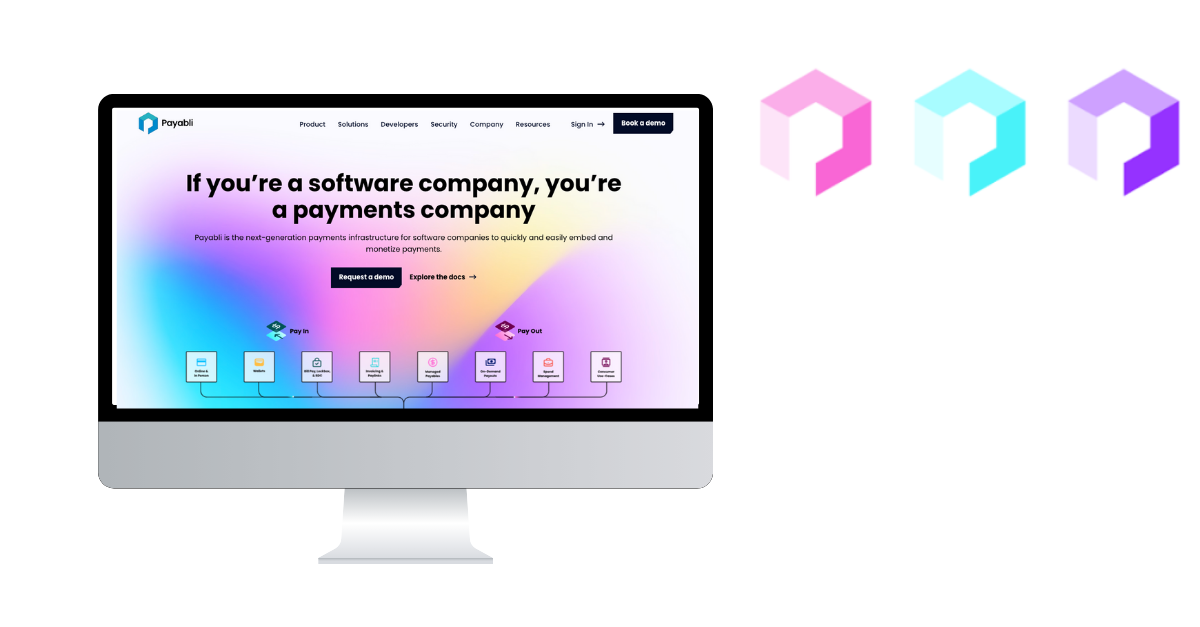
Introducing Payabli’s Elevated Website & Brand Refresh: Empowering the Entrepreneurial Economy

At Payabli, we’ve always been about more than payments. From day one, our mission has been clear: empowering the entrepreneurial economy by enabling software platforms to embed and monetize payments seamlessly. This vision has guided our every move, and today, it takes center stage as we unveil Payabli’s elevated website and brand refresh.

Our new look and feel aren’t just aesthetic updates; they’re a reflection of our growth, our commitment to innovation, and our unwavering dedication to helping software platforms succeed. Here’s why this moment matters—and how it ties into our “why” statement.

A Brand Built for the Future

As the embedded payments landscape continues to evolve, we recognized the need for a brand that mirrors the bold, forward-thinking spirit of the software platforms we serve. Our refreshed brand features:

  • Modern, Streamlined Design: A clean and contemporary aesthetic that speaks to simplicity and sophistication—qualities we aim to bring to every payment experience.
  • Vibrant Colors and Dynamic Imagery: A palette and visual identity that reflect energy, growth, and possibility—the essence of entrepreneurship.
  • Clear and Confident Messaging: Language that resonates with our audience, emphasizing our role as a trusted partner in their journey to monetize payments.

This refresh is more than a visual change; it’s a declaration of who we are and where we’re headed.

Connecting to Our Why

Empowering the entrepreneurial economy isn’t just a tagline; it’s the driving force behind everything we do. Our brand refresh reinforces this mission in several key ways:

  • Clarity in Communication: Our new visual and verbal identity ensures that our message—helping software platforms embed and monetize payments—is unmistakable. We’re here to simplify the complexities in embedded payments and empower our partners to thrive.
  • Focus on Innovation: The updated look reflects the cutting-edge solutions we bring to the table, from our unified API stack to no-code payment tools that make integrating payments effortless.
  • Celebrating Entrepreneurship: Our vibrant brand embodies the entrepreneurial spirit of our customers, who are revolutionizing their industries through software innovation. It also reflects the makeup of our own team—entrepreneurs at heart who understand the challenges and opportunities of building something transformative. This shared entrepreneurial mindset fuels our commitment to innovation and partnership.

Designed for Our Partners

This refresh is not about us; it’s about you—our partners. Whether you’re a SaaS leader, developer, or executive, we’ve reimagined our brand to better serve your needs and align with your vision. Our goal is to be the payments partner you can rely on, helping you unlock new revenue streams and deliver exceptional user experiences.

What’s Next?

Our elevated brand marks the beginning of an exciting chapter. From enhanced resources to innovative product launches, we’re doubling down on our commitment to making payments work for you. The entrepreneurial economy is thriving, and we’re proud to be at the forefront, empowering software platforms to seize opportunities and drive growth.

Join Us on This Journey

Payabli’s refreshed brand is a celebration of progress and potential. It’s a reflection of our mission and a promise to continue delivering value for our partners. As we move forward, we invite you to explore our new look and feel, engage with our tools, and envision how Payabli can help you achieve your goals.

Explore our updated brand and learn more about our solutions at Payabli.com

How ServiceTitan Drove Unprecedented Customer Adoption and Growth with Embedded Payments

Author: Ershad Jamil former Chief Growth Officer of ServiceTitan

From the initial wave of businesses collecting payments through e-commerce sites to the current approach to embed payments into software platforms, if you’re leading a Vertical Software as a Service business (VSaaS), there’s no doubt you’ve started to think about the role payments play across your entire business lifecycle.  In fact, I was in the same shoes in 2015 when I began exploring payments for ServiceTitan.

In 2015, ServiceTitan, an all in-one-platform for home contractors, referred their customers seeking payments to a large payments processor.  This integration required customers  to onboard through the third party payment processor – leaving a disjointed customer experience in which the customer would bounce from the ServiceTitan app to the payment provider.

In addition, the ServiceTitan customer teams were focused on leading the software implementation, not the payment integration.  This led to onboarding bottlenecks for customers using the payment integration. Most of the customers did not have team members dedicated to payments and they struggled to understand why certain documentation, especially sensitive financial statements from contractors, was necessary.  This back and forth could lead to 2-3 month gaps in the onboarding – with little visibility between ServiceTitan and the payments provider.

While only 10-20% of ServiceTitan customers were using the payments integration, I believed that more customers would leverage payments—especially if the payments experience looked a little different. When surveying customers about their experience with the integration, they shared frustrations with the sales and onboarding process. Additionally, the approach to sales, which emphasized “match or beat your pricing,” often resulted in lower take rates for ServiceTitan, even though the product was delivering significant value that exceeded the quoted pricing as a VSaaS business, I knew it was critical to streamline business operations for our customers—and addressing the friction in our payments integration strategy was a key opportunity. By exploring different levers in payments—such as fully embedding payments into our platform and structuring pricing to align better with customer needs—embedded payments could become just as critical to our software and as much of a revenue driver as other core platform features. Allowing home service contractors to take payments directly through a web or mobile app would deliver a significant value add.

In review of the business case with ServiceTitan’s co-founders, head of finance, head of operations and developers, three primary benefits for why to embed payments came to the forefront:

  1. Improved customer experience – Our customers, home and commercial contractors, would be able to accept their customers payments via a web or mobile app, reconcile invoices & payments, view data/analytics via reporting, and more – allowing payments to be a fully integrated experience through the ServiceTitan platform. Not only would the  ‘all in one solution’ provide a better experience for the customer, but also a great opportunity to reduce onboarding time and friction as well as improve retention for our product.
  2. Simplified end customer experience – We understood that if the end customer (a homeowner, for example) experiences a great payment experience (i.e., tapping your phone via Apple Pay, taking a picture of a check via a mobile phone, etc.), it reflects well on the business (contractor) and in the end, reflects well on the software that business is using. Bringing delight throughout the entire process would increase utilization and satisfaction.
  3. Revenue expansion – Taking on more of the work to sell, onboard and support customers via our own integration with a payments partner, we could take a larger revenue share and offer flexible pricing structures that meet customers’ business models.

By 2017, we launched ServiceTitan Payments and it provided a meaningful impact to the company from a revenue and retention perspective.  Within three years, the vast majority of ServiceTitan customers were using the embedded payments offering.

It should be no surprise that other major VSaaS platforms like Mindbody and Toast have also launched embedded payments. There are also so many features that a VSaaS business could benefit from in addition to embedded payments like storing credit cards on file for recurring billing, ability to process a refund in the app, eliminating manual reconciliation, to help their customers streamline their operations.  To increase product stickiness and long term growth, embedded payments is a great starting point.

With support from Payabli I’m going to write a series of articles to help other vSaaS operators to think strategically to optimize their Payments business and avoid many of the pitfalls I encountered along my journey in building ServiceTitan Payments. Stay tuned for more content on driving payments adoption, maximizing payments margin potential, bundling additional fintech products and more.

View the full conversation with Joseph Elias Phillips and I below ????

Breaking Down PCI DSS 4.0 Requirements: How SaaS Platforms Can Achieve Compliance by the March 2025 Deadline

Credit card theft and misuse are growing in both volume and sophistication. Recent reports suggest that cases of credit card fraud have doubled in volume in the last five years.

In response to the shifting nature of e-commerce, the Payment Card Industry Security Standards Council (PCI SSC) announced the PCI Data Security Standard (DSS) 4.0 in March 2022.

The council gave businesses a three-year deadline to prepare for and implement the new standard. As March 2025 grows closer, SaaS platforms must comply with a raft of new PCI DSS 4.0 requirements or face stiff consequences.

What is PCI DSS 4.0?

PCI DSS 4.0 is the latest iteration of the Payment Card Industry Data Security Standard, an updated set of requirements businesses must follow when handling credit card information.

The standard aims to protect customers’ payment data from theft and fraud and ensures businesses that accept, process, store, or transmit credit card information maintain a safe, secure environment.

How does PCI DSS 4.0 affect SaaS providers?

The new PCI DSS 4.0 requirements include changes that directly impact SaaS providers. Let’s break down some of the reasons below.

Expanded scope: The PCI DSS 3.2.1 provided rulings for payment processors. However, the 4.0 version has broadened its scope to include any SaaS providers that store, process, or transmit cardholder data. Even if you don’t directly process payments, you must comply with the new standards. Within the expanded scope, additional cardholder PII info is required.

More robust password requirements: Access to cardholder data environments (CDEs) now requires multi-factor authentication. These changes affect both remote and onsite teams. Password complexity requirements have also become more stringent.

You can read more about the different authentication options in this SSC supplement.

Stronger security controls: While much depends on your type of business and the volume of transactions you process, mechanisms like DMARC, SPF, and DKIM are required to protect against phishing attacks as part of the PCI DSS assessment. Additionally, businesses must commit to testing their security systems more frequently.

Risk assessment: The new standard also mandates that SaaS providers must perform regular risk assessments and proactively identify potential vulnerabilities. What’s more, the new regulations also require businesses to outline and apply security controls to mitigate or remedy adverse findings of these risk assessments.

Customization: While the core 12 PCI DSS requirements are non-negotiable, there is room for a more customized approach to suit the needs of their specific risk environment.

Implications for SaaS providers

Meeting the new PCI DSS 4.0 standards will have several implications for SaaS businesses. Some of the topline impacts include:

  • Increased compliance costs: Meeting these new requirements means many SaaS providers will need to invest in new tech, personnel, and processes. These investments will result in a rise in compliance costs for many businesses.
  • More security monitoring: The standards’ increased emphasis on monitoring and assessing risks means SaaS teams will need to budget for more time on security processes.
  • Workflow adjustments: Stronger authentication and security controls could cause disruptions in existing workflow processes for many SaaS providers.
  • User experience: On the user side, some SaaS end users might face extra steps when paying for products. However, disruptions should be minimal and more than justifiable when weighted against security benefits.
  • Third-party risk management: SaaS providers must also ensure their third-party vendors or partners comply with PCI DSS 4.0. That means tighter contractual agreements, more ongoing monitoring, and enhanced due diligence in vendor selection and assessments.

What happens if SaaS businesses don’t comply with PCI DSS 4.0?

Non-compliance with PCI DSS 4.0 is not an option. Some of the penalties and adverse effects that could result from ignoring the March 2025 deadline are detailed below.

Fines: SaaS companies that fail to comply with PCI DSS 4.0 could face stiff monthly fines of between $5,000 and $10,000. The precise amount depends on various factors, such as non-compliance severity, business size, and any holdups in remedying the situations.

Business disruptions: Failure to comply with the new standards can lead to catastrophic payment processing bans for SaaS businesses. Additionally, non-adherence could result in companies being placed on the MATCH List or Terminated Merchant File (TMF) and even the potential loss of contracts needed to continue accepting card payments.

Legal liabilities: Failure to comply could open up SaaS businesses to lawsuits from affected parties, defense costs, and settlements. Additionally, it could increase the likelihood of audits from bodies such as the FTC, which could result in additional financial penalties.

Data breaches: The new regulations were designed to reduce the likelihood and effect of data breaches. Organizations that do not meet these standards run the risk of expensive and reputation-shredding data breaches and loss of trust among their users.

Lost access to payment processing: While this downside is limited to the worst infractions, SaaS companies that do not comply with PCI DSS 4.0 could lose access to payment processing, which would constitute an existential risk.

Additionally, merchants operating under software platforms that fail to comply with PCI DSS 4.0 face significant financial, operational, and reputational risks similar to those outlined above.

How can SaaS providers prepare for the March 2025 deadline?

With the March 2025 deadline on the horizon, SaaS teams need to take action before it’s too late. Here are some actions that can ensure you’re ready.

  • Look at the PCI DSS 4.0 requirements and compare them to your current security practices. Identify what you must do to improve your security with these new standards.
  • Perform a comprehensive risk assessment to pinpoint your vulnerabilities and shortlist tasks for remediation.
  • Right now, PCI DSS 4.0 standards are thought of as best practices. However, implementing them now will ensure you’re ready for March 2025.
  • Update your security policies, procedures, and practices to align with PCI DSS 4.0.
  • Ensure that any third-party vendors and partners are compliant.
  • Ask a Qualified Security Assessor to audit your current setup and make recommendations toward compliance.

How Payabli Can Help?

Partnering with an experienced and reputable payment service provider like Payabli can help you navigate the complexities of PCI DSS 4.0 compliance. Here is how we can support your business.

  • Payabli handles the storage, processing, and transmission of cardholder data. SaaS businesses can significantly reduce their exposure to PCI DSS 4.0 compliance standards and broader security risks by allowing us to manage their payments.
  • Payabli replaces sensitive cardholder data with tokens, adding an extra security layer and mitigating data breaches.
  • Our payment processing infrastructure is already PCI DSS 4.0 compliant as well as featuring encryption, firewalls, intrusion detection, and regular security audits. We stay up to date on emerging security threats, best practices, and regulatory changes, allowing SaaS providers to remain compliant with PCI DSS 4.0.
  • Finally, and perhaps most importantly, we have a team of payment experts with deep experience in implementing and maintaining PCI DSS 4.0 compliance. Payabli can provide personalized guidance on how your SaaS organization can meet PCI DSS 4.0 standards, helping you understand and interpret the requirements and outline areas for improvement.

Through a mix of security document preparation, self-assessment questionnaires, and audit support, we’ll ensure your SaaS business meets PCI DSS 4.0 standards and avoids fines, security breaches, and loss of payment processing associated with non-compliance. In addition, we offer ongoing PCI support, helping to ease the burden of managing and maintaining compliance. This not only protects your SaaS business but also enhances your end-user customer experience by safeguarding their sensitive data.

Reach out today to see how we can help.


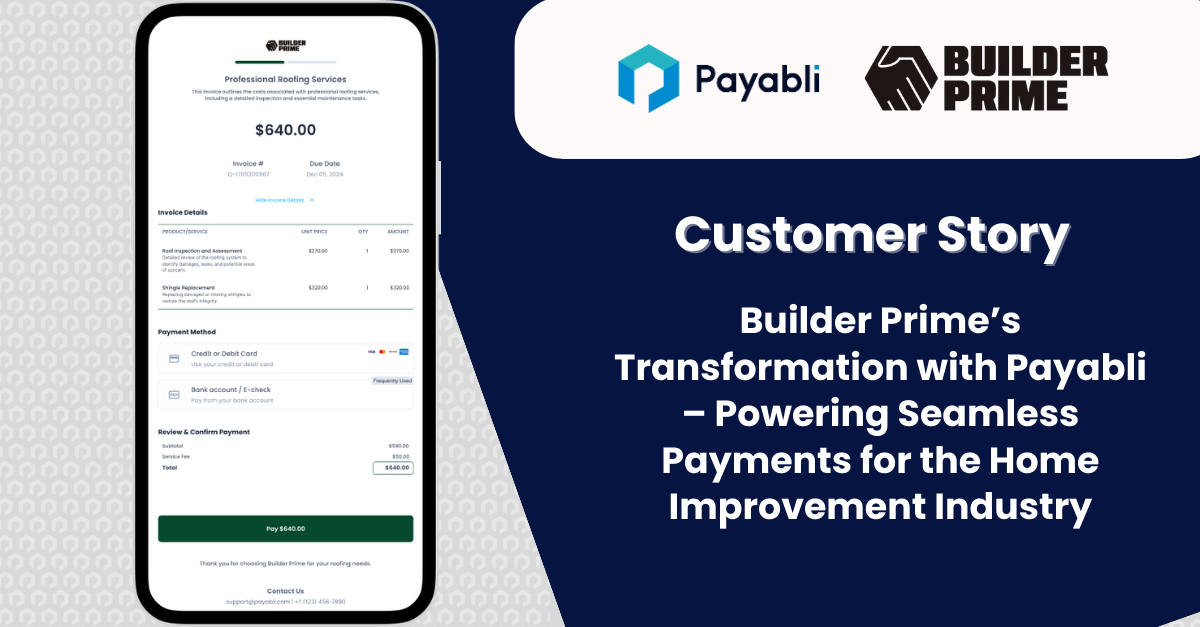
Builder Prime’s Transformation with Payabli – Powering Seamless Payments for the Home Improvement Industry

Revolutionizing Home Improvement: Builder Prime’s Vision

Founded in 2016 by Jonathan Weinberg, Builder Prime is bringing efficiency to specialty and replacement contractors and offering an all-in-one business management solution. This powerful platform integrates CRM, estimating, production management, invoicing, payments, and more. Oftentimes specialty and replacement contractors faced significant challenges in managing deposit payments and final payments at job completion. By offering streamlined, automated solutions, Builder Prime enables businesses to operate more efficiently, win more jobs, and grow, while delivering exceptional customer experiences from lead to referral.

Builder Prime’s journey began with Weinberg’s own home renovation experience in 2007. With a background in software and financial services, he identified inefficiencies in the contractor industry and decided to develop a solution that would simplify the complexities of home improvement business operations. Today, Builder Prime serves a wide range of contractors, including specialty and replacement contractors, and is trusted by hundreds of home improvement businesses.

The Challenge: From Delayed Payments and Site Revisits to an All-in-One Solution

From the early days of Builder Prime, payments were top of mind for Weinberg and his team. As they streamlined the sales process, including contracts and e-signatures, they realized a major inefficiency in collecting payments. Customers relied heavily on manual, paper-based invoicing and payment methods such as paper checks or in-person credit card swipes. This not only delayed payments but also required contractors to physically revisit customer homes to collect deposits, adding time and travel costs.

In particular, specialty and replacement contractors faced significant challenges in managing deposit payments and final payments at job completion. The lack of integration between payments and the rest of Builder Prime’s automated workflow created friction in an otherwise efficient system, impacting both contractor operations and customer satisfaction.

Why Payabli?: The Game-Changer for Embedded Payments

Builder Prime initially partnered with a popular payment solution for software startups. However, they quickly encountered limitations with the provider’s basic package, particularly around pricing flexibility, risk management, and customer support. Additionally, their fee structures led to reconciliation issues for Builder Prime’s customers, as fees were deducted without transparency, making it difficult for customers to reconcile payments accurately.

Builder Prime needed a new payment solution—one that would provide visibility into fees, offer more robust support, and allow them to grow without taking on undue risk. After evaluating their options, they chose Payabli for its significant domain expertise in the field services vertical, trusted advisory, technical flexibility, and scalable economics offering that grows alongside Builder Prime.

Payabli not only offered a seamless integration process but also provided the level of trust and transparency Builder Prime needed. Builder Prime was able to customize pricing and fees, gaining greater control over their payments strategy and revenue. With a shared background in SaaS, Payabli’s team was able to deliver tailored solutions, including revenue-sharing opportunities and dedicated support and expert payment guidance around PCI compliance and chargebacks. Builder Prime’s decision to partner with Payabli was driven by the people behind the platform and the potential for a mutually beneficial relationship.

Flexibility drives 1000% growth

With the transparency and control Payabli provides, Builder Prime can now offer flexible pricing models from Flat Rate, Interchange Plus and Pass-through models that allow contractors to compliantly pass credit card fees onto customers or offer cost-effective ACH options. This flexibility has become a compelling selling point for Builder Prime’s customers.

Since implementing Payabli in 2021, Builder Prime has seen impressive growth, with payment volume increasing by 1000%. The payment integration has not only enhanced customer retention but has also become an integral feature that drives the overall user experience. Today, nearly half of Builder Prime’s users rely on the payment system, and the percentage continues to grow.

From the beginning, Payabli’s customer support and onboarding experience stood out. The integration process was fast, taking only a few weeks, and Payabli’s team provided real-time support, even setting up a dedicated Slack channel for quick access to engineers for technical questions. Payabli’s product continues to evolve and Builder Prime continues to enhance their payments offering as Payabli adds new functionality and products.

Payabli has helped Builder Prime deliver a superior customer experience by simplifying the payment process.

Additionally, Payabli has become a meaningful part of Builder Prime’s Business Model, helping boost business growth and enabling the company to confidently offer a solution that meets the needs of their industry.

Looking Ahead: Continued Innovation for Builder Prime Payments

Looking to the future, Builder Prime and Payabli’s partnership will continue to evolve. With plans to implement additional features such as Apple Pay, Google Pay, and mobile check capture, Builder Prime aims to expand their payment capabilities further. Moreover, Payabli’s sophisticated payables solution will allow contractors not only to accept payments from customers but also to manage vendor and subcontractor payments—closing the loop on a fully integrated financial system.

Payabli has proven to be more than just a payments provider for Builder Prime—it’s a trusted partner driving innovation, growth, and efficiency. Together, they’ve transformed Builder Prime’s offering, delivering a seamless, integrated payment experience that meets the unique needs of home improvement contractors.

This partnership isn’t just about payments—it’s about creating lasting value for contractors, customers, and the home improvement industry as a whole. And with Payabli, Builder Prime is leading the charge.

Payment Rails: What Are They, Their Evolution, and How They Work

Commerce has evolved over millennia, and today, online businesses depend on electronic transactions to drive their operations. Customers expect the convenience of instant payments, which, while seeming magical, rely on complex systems behind the scenes. This article will explain what payment rails are, why they are important, and how they work to move money securely.

What Are Payment Rails?

Let’s start from the beginning – what exactly are payment rails? As the name implies, payment rails are similar to the physical rails that trains run on to transport goods over land. But instead of carrying physical items, payment rails transport money and data. Payment rails are the infrastructure and technology platforms that enable the movement of funds between payer and payee, facilitating transactions in the financial ecosystem. Think of them as the “tracks” on which payment information travels, similar to how physical railroads move goods and people.

These exchanges can happen between banks, businesses, and individuals. As such, they have become a crucial component of the financial ecosystem.

A Brief History of Payment Rails (1950-2010s)

You could argue that payment rails started with the first checks. These paper documents were like early versions of electronic payments and allowed customers to pay merchants without having the legal tender on hand. But it wasn’t until computers and electronic networks came along that payment rails took off.

In 1958, Bank of America introduced the first general-purpose credit card, the “BankAmericard,” marking the start of “card rails” and shifting payments from cash and checks to a credit-based system. This innovation evolved when BankAmericard became Visa in 1976, creating a global network that enabled cross-border payments and connected millions of merchants and cardholders.

About ten years after the launch of the BankAmericard, Automatic Clearing Houses (ACH) were introduced. ACH was developed as a solution to the growing need for efficient processing of large volumes of paper checks and electronic payments. The ACH network provided a way to move money between bank accounts electronically, facilitating transactions like direct deposit of payroll and automatic bill payments.

In 1978, SWIFT (Society for Worldwide Interbank Financial Telecommunication) revolutionized international finance by providing a standardized, secure messaging system for cross-border transactions. Before SWIFT, international payments were slow, costly, and error-prone due to the lack of a common protocol.

Then came the Internet, which completely transformed the payments landscape once again. The rise of the Internet in the late 1990s and early 2000s led to the emergence of Peer-to-Peer (P2P) networks, with PayPal being one of the most prominent examples. PayPal allows people to send and receive money digitally, bypassing traditional banks and payment methods.

Even traditional payment methods like checks have adapted to the digital age. With the advent of mobile banking, checks have received a modern update through mobile deposit features. Now, instead of visiting a bank or ATM to deposit a check, people can simply snap a photo of it with their smartphone and deposit it from anywhere.

In recent years, the development of real-time payments (RTP) has been a significant milestone in the U.S. payments landscape. Launched in 2017 by The Clearing House, RTP enables instantaneous transfers of funds between bank accounts, 24/7/365. Unlike traditional payment methods that could take days to process, RTP allows recipients to access funds immediately, even on weekends and holidays.

New payment technologies continue to evolve, with innovations like blockchain, digital wallets, contactless payments, biometric authentication, and AI pushing the boundaries of what’s possible. These advancements make transactions faster, safer, and more seamless, as the payments industry adapts to growing consumer expectations and technological capabilities in a digital-first world.

How Payment Rails Work

Payments can be categorized as push, pull, or a combination of both. Push payments offer control and are ideal for instant transfers, while pull payments are convenient for recurring bills and purchases. Systems like ACH provide versatile solutions for various business and personal finance needs.

  • Push Payments: In a push payment, the payer initiates the transaction by sending money directly to the recipient. A great example of this is Real-Time Payments (RTP). With RTP, the payer actively “pushes” funds from their bank account to the recipient’s account. This type of payment is usually instant, and the recipient has immediate access to the funds, even on weekends or holidays.
  • Pull Payments: On the other hand, pull payments work the opposite way. Here, the recipient or merchant initiates the transaction by requesting funds from the payer’s account. Credit cards are a common example of pull payments. When you make a purchase with a credit card, the merchant requests the amount owed from your credit card issuer, which then pulls the funds from your line of credit to pay the merchant.
  • Combination of Push and Pull: Some payment systems can operate as either a push or pull, or even a combination of both, depending on how they’re used. ACH (Automated Clearing House) is a great example of this flexibility. ACH can function as a push payment when you, for instance, initiate a direct deposit to pay your employees—sending money from your account to theirs. It can also work as a pull payment when a utility company automatically withdraws your bill payment from your account each month.

The Formula for Processing Payments

While different payment rails might use slightly different methods, most follow a similar process. Here are the main steps:

  • Initiation: The payment process starts when the payer authorizes the transfer of funds. That could mean swiping a debit card, signing a check, initiating a recurring payment, or logging into an online bank account and entering payment details.
  • Payment Creation: Once the payer approves the payment, a financial message with relevant transaction data is generated. It includes the amount to be paid, account numbers, and other information required to complete the transfer.
  • Processing: The payment message enters the payment network, which could be a card network like Visa or Mastercard or an ACH network. Here, a series of steps and checks ensure the transaction is valid and authorized.
  • Confirmation: This step occurs as soon as funds are guaranteed and the transaction is authorized. Confirmation messages are returned to the payer, payee, and other relevant parties, serving as proof that the payment went through.
  • Settlement & Reconciliation: Finally, the actual transfer of money occurs. This settlement process can happen instantly or not, depending on the type of payment rail. Once settled, accounts are reconciled and updated accordingly.

Types of Payment Rails

Now that we know what payment rails are, let’s look at the different types. We can group payment rails based on how they handle transactions, how fast they work, or what technology they use. Here are some of the leading payment rail systems in use today:

Automatic Clearing Houses (ACH)

ACH is a system that processes electronic payments in batches. It’s mainly used for direct paycheck deposits and automatic bill payments. In the US, ACH is overseen by NACHA (National Automated Clearing House Association).

One of the great things about ACH is that it’s affordable and perfect for recurring payments. If your paycheck gets deposited straight into your bank account every month, that’s probably through ACH. If you’re in the SaaS business and deal with ACH, check out our blog to learn more about ACH and ACH returns, how they work, and why they’re important.

Card Networks

Card networks like Visa, Mastercard, American Express, and Discover manage the infrastructure for secure and efficient card transactions. The process starts when a purchase is initiated, with transaction data sent through the network connecting the merchant’s bank (acquirer) and the cardholder’s bank (issuer). The issuer authorizes the transaction, verifying funds or credit, and once approved, the transaction is processed, transferring funds from the cardholder’s account to the merchant’s account.

Card Acceptance

Merchants can accept credit and debit cards as payment for invoices, goods, and services, expanding their customer base and streamlining their payment processes. Card payments can be processed online, by mail, over the phone, or using a physical point-of-sale device. Card details can also be stored for recurring payments, ensuring seamless transactions for subscription-based services or repeat purchases.

Additionally, merchants can leverage digital wallets to facilitate card payments, enhancing convenience for customers. Digital wallets enhance the security of card transactions by tokenizing and protecting card information. When a card is stored in a wallet, it is converted into a temporary virtual card at the time of purchase. This tokenization process ensures that the actual card details are never exposed during the transaction, reducing the risk of fraud.

Card Issuance

Card issuance allows individuals to obtain cards for making payments in person, online, or via mail/telephone orders. These cards come in various forms—credit, debit, prepaid, and gift cards—each serving different financial needs. Issued cards can be either virtual or physical, offering flexibility in how they are used. Additionally, cardholders benefit from purchase protection features, such as the ability to dispute unauthorized transactions, ensuring a fair and secure payment experience.

Interac

Since 1984, Interac has been Canada’s predominant payment network, linking financial institutions to process debit card payments at point-of-sale terminals and online. It also enables peer-to-peer money transfers through Interac e-Transfer, allowing account holders to send money using only an email address or mobile number, with SMS payments becoming particularly popular.

Domestic Wires

Domestic wires are a type of payment rail used to transfer money quickly and securely, typically for large-ticket items or transactions within a country. These transfers are instantaneous, making them ideal for situations where speed is crucial, such as high-value purchases or urgent payments. By leveraging established financial networks, domestic wires ensure that funds move efficiently between accounts, providing a reliable option for significant financial transactions.

Real-Time Payments and FedNow

This system, introduced by The Clearing House in 2017, revolutionizes payment processing by enabling real-time transactions with immediate fund availability, even on weekends and holidays. When a payer initiates a transaction through their bank’s online platform or app, funds are instantly transferred via the RTP network, allowing the recipient immediate access. Unlike traditional methods, RTP transactions are final and irrevocable, providing instant confirmation to both parties.

RTP Push and Requests for Payment

RTPs are initiated as a “push” of funds, meaning the payer actively sends money to the recipient, with no way to directly “pull” or debit funds from a payer’s account. Instead, businesses use a “Request for Payment” (RFP), which the payer must approve to process the payment. This method enhances security by ensuring payments require the payer’s explicit consent. RTPs provide instant access to funds, even on weekends.

FedNow

FedNow, an upcoming real-time payment service from the Federal Reserve, aims to enable instant transactions between banks 24/7/365. It will expand real-time payment access across the financial system, especially for smaller banks and credit unions, enhancing speed, efficiency, and accessibility for U.S. payments.

Payment Rails for SaaS Platforms

At Payabli, we like to say, “If you’re a software company, you’re a payment company.”

Every business, including SaaS companies, must handle payments and manage their entire lifecycle, from initiation to settlement. This includes processing sales, subscriptions, and paying bills for services like internet and vendors. By allowing users to manage these inflows and outflows in one place, you empower them to grow their business efficiently through your platform. Partnering with Payabli offers secure, fast, and convenient tools to support this growth. Here are some benefits:

Compliance & Security

In fintech and banking, navigating financial regulations and data security standards can be complex. Payment rails streamline compliance by transmitting payments through regulated networks that adhere to strict standards. Payabli complies with PCI Security Standards to ensure cardholder data is protected and NACHA standards to safeguard ACH transactions. This ensures that all sensitive payments are securely handled and compliant with all relevant regulations.

Speed

Payments once took weeks, causing delays and frustration. Now, payment rails enable transfers within hours or minutes. Time-sensitive SaaS companies benefit from faster settlements, improving cash flow visibility and decision-making. APIs offer instant payment requests, eliminating the wait for paper checks, while real-time status updates provide near-instant notifications when payments are funded or paid.

Customer Experience

The modern consumer and business expect fast, convenient online payment experiences with multiple options, from cards to mobile wallets. Payment rails help SaaS platforms meet these expectations by enabling payments through credit cards, debit cards, ACH transfers, and mobile wallets like Apple Pay or Google Pay. They also allow for easy payment processing via hosted payment pages or embedded checkout solutions. The result is improved customer satisfaction, loyalty, and increased referrals.

The Future of Payment Rails

Predicting the future of payment technology is challenging, but payment rails are likely to evolve in three key areas. First, payment rails change with technology; the rise of the Internet brought systems like PayPal and Stripe, and blockchain could lead to more decentralized rails. Second, AI can enhance payment processing by improving fraud detection and making transactions safer. Lastly, payment rails will increasingly integrate with other services like accounting, billing, and identity verification, creating a more holistic financial experience.

Get Started With Payabli

If you’re running a SaaS or platform business, the time is now to integrate compliant payment capabilities that help you scale globally. If you don’t, you risk falling behind your competitors.

Payabli offers the next-generation payments infrastructure to help software companies quickly embed world-class payments into their platform. We cover all aspects of payments: Pay In, Pay Out, and Pay Ops (we call these the 3Ps).

Book a demo with Payabli today to see how you can enable fast, secure payment acceptance through global payment rails with just a few lines of code.

Top 5 Considerations for SaaS Platforms Seeking a New Embedded Payments Provider

Embedded payments is a highly strategic and critical focus for modern software platforms. Companies like Toast, Mindbody, and ServiceTitan wrote the playbook on seamlessly integrating payment functionalities within their product to enhance user experience and drive massive revenue. As technology evolves, so do the options for embedded payment providers. Unlike the early SaaS pioneers that had to cobble together multiple legacy payment partners to execute their payments strategy,  more modern superior solutions have emerged to help software companies quickly and easily embed and monetize payments. Selecting the right provider is a crucial decision, with implications for your SaaS business’s profitability, security, and customer satisfaction. With numerous factors at play, careful consideration is essential to ensure a smooth transition and continued success in the competitive landscape of SaaS. 

In this blog, we will cover the top 5 considerations SaaS platforms should consider when deciding which embedded payments provider to partner with. Check out our free checklist at the end to keep these considerations handy during your decision process.

1. Integration Flexibility

One key consideration is the integration flexibility that the payment provider offers you and your platform. When choosing your next embedded payments provider, you’ll want optionality and a partner that can meet you where you are in your payments journey. If you have full company buy-in and are aggressively resourcing for your Payments Integration and In-House Payments Business, you’ll want a partner that offers robust APIs and dev tools coupled with expert solution engineering. If you’re in a bind with your existing provider and are looking to make a switch but are strapped for resources, you’ll want a partner that can provide tools, and support a crawl, walk, run approach. Maybe you’re focused on providing an Embedded Payables solution to your customers, but wouldn’t it be nice if you could monetize Payment Acceptance with the same provider in the future?

Here are a few questions your SaaS organization should consider around integration flexibility:

  • Does the payment provider offer flexibility with API-based integrations or pre-built integration paths and their respective benefits and limitations?
  • Do they accommodate any existing business operations, infrastructure, or workflows your SaaS platform currently operates on and provide the optionality to integrate seamlessly?
  • Do they give you the choice of a self-service or guided implementation process? On either path, you’ll want to seek an embedded payments provider that offers open lines of communication during the integration process to field any real-time questions or concerns that arise.

2. Scalability and Performance

When considering a new embedded payments provider for your SaaS platform, scalability and performance should be top of mind. Here are a few things to consider when thinking about scalability and performance measures with your next payment partner:

  • Do they address the scalability challenges associated with rapid growth, change management, and increased transaction volumes? Working with a payment provider that helps you navigate change from your existing provider while keeping your business operational is crucial. You want to work with a provider that understands the potential hiccups that may occur within this process. 
  • Do they explore the opportunities to enhance revenue within your existing business portfolio? For example, are they practicing things like cost analysis around payments? Are they performing residual analysis to optimize your portfolio for key payment components like payables and receivables?
  • How long does it take to enable your sub-merchants from start to finish? For example, seeking a provider that helps streamline client acquisition with key features such as bulk boarding, and automated underwriting to get your customers boarded and transacting as quickly and efficiently as possible. 
  • Do they offer a robust infrastructure capable of handling peak loads, and advanced & efficient boarding capabilities for your customers? Consider the reliability of key payment performance measures such as uptime, transaction speed, and bandwidth to ensure uninterrupted services.

3. Security and Compliance

As a SaaS platform considering a new payment provider, prioritizing top-notch security and compliance features is essential to safeguard your operations and customer data. So, what makes a provider secure and compliant? And how can you confidently choose a provider that will securely manage and process payments on behalf of your clients? 

Consider the following:

  • Does your payment provider abide by the rules and regulations established by the PCI Council and possess the relevant industry certifications verifying this? Do they educate and work with you to better understand the compliance rules and regulations? For example, do they engage around questionnaires and work with your end users to get all the information they need or do they leave them to your organization to handle independently?
  • Do they provide advanced risk monitoring, and fraud prevention tools, and educate you on them and exactly what they mean for your business?
  • What tools and resources are provided to you around the underwriting process to ensure legitimate businesses are the only ones that process transactions through your platform? How are they ensuring bad actors are not at play?

These measures ensure a secure and compliant payment environment, protecting both your SaaS business and its customers from potential risks.

4. Customer Support

Customer support is crucial for SaaS platforms choosing a new embedded payments provider because it ensures smooth implementation, onboarding, and ongoing management of payment processes. Working with a payment provider that offers reliable support helps address technical issues quickly, minimizes downtime, and assists with integration challenges. Strong customer support enhances user experience, fosters trust, and allows your  SaaS platform to focus on its core business activities.

Here are some key questions and considerations around customer support:

  • Can the payment provider offer top-level support consistently? Are they assessing your needs from the initial phases during pre-integration and do they take a guided approach offering you the support and solutions your platform needs post-integration?
  • If your team lacks the bandwidth or expertise in payments, does the payment provider offer designated individuals available to your team to assist in streamlining your platform’s payment processes, ensuring consistency and reliability? Their expertise can mitigate errors, reduce delays, and enhance the overall efficiency of financial operations.
  • What tools, technology, and resources does the payment provider offer to support your needs?

5. Cost and Pricing Transparency

You’ll want to work with a payment partner who guides you through the right cost and pricing structures that are easily understood and help drive revenue for your SaaS business. Here are a few key areas to consider when it comes to cost and pricing transparency:

  • Does the payment provider offer the payment expertise to educate you on the complexities of cost and pricing models for your payments business? Pricing with payments can be custom to your industry – does the payment provider guide you to price competitively to your specific SaaS market?
  • What level of exposure do you get to the true cost of transactions and how willing is your provider to engage with you on this topic? Are they walking you through key pricing and cost measures including transaction fees, or interchange rates, and ensuring you are optimizing your portfolio’s revenue potential? 
  • What tools, tech, and resources are you being offered? How can your payment provider work with your specific business model, and help you save money with things like surcharging, service fees, and convenience fees?

Conclusion

Choosing the right embedded payments provider is a pivotal decision for modern SaaS companies. This decision significantly impacts your business’s efficiency, security, and customer satisfaction. By carefully evaluating key factors, you can ensure a seamless integration process and maintain a competitive edge in the SaaS landscape while scaling and monetizing your payments business.

Download our free checklist to keep these considerations in mind. 

Looking to learn more? Schedule a demo with one of our experts today.