Category: Product

Remote Deposit Capture for SaaS: Modernize Check Payments

While digital payments like cards and ACH are on the rise, many businesses across industries still rely heavily on checks. Paper checks remain a common payment method across SaaS verticals like field services, property management, legal, and healthcare—yet most platforms lack the tools to manage check deposits digitally. That’s where remote deposit capture comes in: it enables businesses to scan and deposit checks electronically, streamlining a historically manual process and helping platforms modernize check acceptance alongside digital payments.

Payabli’s Remote Deposit Capture (RDC) solves this problem by embedding check scanning and depositing directly into your software platform. With RDC, your merchants can capture and deposit checks without leaving your application—improving cash flow, reducing errors, and consolidating all payment data in one place.

What Is Remote Deposit Capture?

Remote Deposit Capture is a technology that enables users to scan and deposit checks digitally using a mobile device, desktop scanner, or tablet. Instead of physically visiting a bank or relying on manual uploads, RDC streamlines the check deposit process and allows deposits to be initiated from within your software.

With Payabli’s RDC, platforms can embed this capability into their existing UI, giving merchants a faster, simpler way to manage check payments while keeping all transactions—cards, ACH, and checks—within a single system.

Benefits of Remote Deposit Capture with Payabli

Faster Deposits
Cut time-to-cash by more than 60%. Checks that once took up to 8 days to clear can now be deposited and processed in just 2–3 days.

Embedded Check Capture
Offer a seamless user experience with white-labeled check scanning built directly into your software. Merchants can capture and deposit checks using their mobile phone, desktop, or tablet.

Image Validation & Quality Assurance
Payabli’s RDC technology ensures a ~97% image acceptance rate, minimizing errors and rejected deposits through automated image validation.

Streamlined Reconciliation
Eliminate fragmented systems. Consolidate all payment data—card, ACH, and checks—into a single platform for improved financial visibility and simplified reporting.

Developer-Friendly Integration
Go live in days, not weeks. Our clean APIs, robust documentation, and pre-built UIs make it easy to embed RDC into your platform.

Flexible Monetization
Monetize RDC by marking up ACH service fees or joining our revenue share program. Control your margins and unlock new revenue streams.

Ideal Use Cases and SaaS Verticals for Remote Deposit Capture

Payabli’s Remote Deposit Capture is ideal for B2B SaaS platforms that support industries with high check volumes and field-based operations, including:

  • Field Services and Construction
  • Property Management and HOAs
  • Legal and Professional Services
  • Healthcare
  • Nonprofit

Additional Capabilities

  • White-Labeled Experience: Match your brand with customizable UI for check capture.
  • On-Site Image Capture: Enable users to scan checks instantly from their location.
  • Upcoming X9 Support: Soon support high-value business checks above $25,000 with X9 file integration.

Why Remote Deposit Capture Matters

Many SaaS platforms already use Payabli to manage card and ACH payments. However, checks are often handled outside the platform, requiring manual deposits and creating reconciliation challenges. This disconnect leads to operational inefficiencies, slower cash flow, and increased errors.

By embedding Remote Deposit Capture, your platform becomes the single destination for all payment types—delivering a better experience for merchants and giving you a competitive edge.

Get Started Today

Ready to embed Remote Deposit Capture into your platform and modernize check collection for your users? Contact our team today to get started — or explore our developer docs to see how easy integration can be.

The Power of Split Funding and Dynamic Funds Routing for Property Management and “Need to Pay” Verticals

Horizontal payment processors have served software platforms for years but lack flexibility critical to certain key verticals. Enter split funding and dynamic funds routing. In this blog, we’ll explore how split funding and dynamic funds routing transform payment processing for software platforms serving key “Need to Pay” verticals like Property Management. From flexibility to facilitating complex payment management, we’ll uncover the benefits and their impact on digital commerce.

Understanding Split Funding and Dynamic Funds Routing

  • What is Split Funding and Dynamic Funds Routing? This is the process in which a software platform that is processing payments can split a transaction and have it deposited into multiple merchant accounts or on their behalf.

Split Funding and Dynamic Funds Routing: Benefits for Software Platforms 

When it comes to split funding and dynamic funds routing, there are multiple benefits software platforms will see when working with the right payment provider.

Never co-mingle funds again. With split funding and dynamic funds routing your software platform can avoid the co-mingling of funds. Co-mingling of funds typically refers to the mixing or pooling of funds from multiple transactions or sources into a single account but also consolidating different funds sourced for different purposes. For certain verticals, this provides superior user experiences while remaining compliant, while the co-mingling of funds is highly discouraged.

By eliminating the co-mingling of funds, your platform will avoid:

  1. Accounting Challenges: WIth traditional payment processing providers, all your transactions occur within a basic merchant account and among daily batches of transactions. This means that funds get routed to one or two bank accounts with limited control over how they get settled, inadvertently mixing funds from different sources. This makes it difficult to track individual transactions or understand the origin of specific settlements within your clients’ bank accounts.
  2. Compliance Headaches: Depending on the jurisdiction and industry, there may be regulations or legal requirements governing the segregation of funds, particularly when handling transactions on behalf of others (e.g., customers or clients).
  3. Lack of Transparency: Maintaining records of all your transactions from your customers coupled with keeping track of funding transfers, payments to your software companies, and other bills in bank accounts places an undue burden on businesses. This can be a nightmare operationally and may even require you to leverage third-party tools to just make sense of it all.

Additionally, split funding and dynamic funds routing allow software businesses to optimize for:

  • Improved customer experience: ensuring timely and accurate payments, increasing customer experience within your platform as it relates to payments, and the splitting of funds overall.
  • Increased compliance and transparency: facilitating adherence to financial and compliance regulations and providing clear records for auditing.
  • Ease of payment management: simplifying reconciliation and reporting, eliminating the need to track individual transactions across multiple accounts. Working with the right payment provider offers a streamlined approach that not only saves time and resources for software platforms but also improves accuracy and transparency, enhancing the platform’s financial visibility and control of all transaction details in one centralized view.

Which SaaS Industries Can Benefit From Split Funding and Dynamic Funds Routing?

Certain SaaS industries significantly benefit from utilizing split funding, specifically to eliminate the co-mingling of funds. One key industry is the HOA software industry. For example, if you are operating as an HOA software company, you are responsible for all of the individual HOA management companies under you, who are responsible for collecting all of their homeowner payments and fees. When the HOA management companies under your platform receive payments from the homeowners, they need to ensure there is no co-mingling of funds that eventually flow through as transactions via your platform. For example, a homeowner may pay an HOA management company under your platform for renting out the pool area at their building but also pay a fee for re-paving the roads at the HOA community. If both of those transactions settle into the same pool, this would be considered a co-mingling of funds. Co-mingling funds in HOA software platforms is highly discouraged to ensure financial transparency, comply with legal requirements, and prevent fraud. Keeping funds separate simplifies accurate accounting, reporting, and auditing while reducing liability and maintaining homeowner trust.

Streamlining Payment Management & The Power of Working with the Right Payment Provider

Payabli empowers software platforms to optimize their payment processing, drive revenue, and boost customer satisfaction with a unique payment feature set that is fully integrated and baked into each platform’s product experience. Unlike many payment providers in the space, Payabli offers robust split funding capabilities, setting up each customer on your platform with the appropriate amount of merchant accounts and ensuring the correct funds routing to eliminate the co-mingling of funds. This allows you to process transactions securely and compliantly, routing funds to different bank accounts while seamlessly reconciling split funding through comprehensive transaction and settlement reporting APIs and UIs. Our team provides the tools to direct and split funds according to your unique business needs, ensuring compliance and enhancing user experience.

To see how these innovations can revolutionize your software platform’s payment processing, we invite you to watch our video on split funding and dynamic funds routing.

Interested in learning more? Schedule some time to chat with one of our payment experts. We’ll show you how our API-first payment solution can empower your business to build seamless payment experiences.


What is Payment Tokenization and How Can it Enhance Security for Your Software Business?

Security in payment transactions is crucial for software businesses, and payment tokenization offers an innovative solution to this challenge. As we mentioned in our previous blog, there are multiple types of tokenization including standard, multi-use, and network tokenization. Each can benefit a software business’s unique use case and play a crucial role in its payment strategy.

In this blog we take a step back to explore the fundamentals of payment tokenization, why it matters for software businesses, its role in safeguarding sensitive payment data, and its impact on transaction security. We also emphasize the significance of partnering with the right payment provider for seamless and secure token migrations, ensuring a smooth experience for software businesses and their customers.

What is Payment Tokenization?

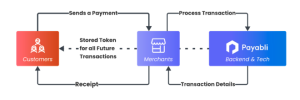
Payment tokenization involves replacing sensitive payment data, such as credit card numbers or bank account details, with randomly generated tokens. These tokens are used to facilitate secure transactions without exposing actual payment information. When a customer initiates a transaction, the payment system generates a token representing that information instead of transmitting their payment information, such as credit card or bank account details. This token is then passed through the payment process and stored in your business’s payment platform for future usage. If the token were intercepted, it would be rendered ineffective for use by unauthorized individuals or hackers, because it does not contain any sensitive data. The diagram below shows how payment tokens work for software businesses and their customers, and how the payment platforms’ backend tech, such as Payabli helps facilitate the payment tokenization process.


Why Does Payment Tokenization Matter for Software Business?

For software businesses, payment tokenization enhances security by reducing the risk of data breaches and fraud. It allows them to handle payment transactions without storing sensitive data, thus minimizing liability and compliance requirements. Additionally, payment tokenization enables software businesses to offer their customers a safer and more secure payment experience, which can enhance trust and loyalty.


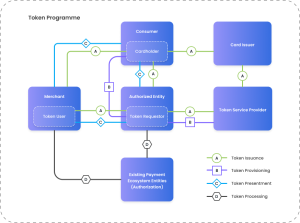
Graph from EMV Co

Exploring Different Types of Payment Tokens

There are three generally well-known forms for tokens:

Traditional Payment Tokens: These tokens are generated by replacing sensitive payment card details such as credit card numbers with a randomly generated string of characters. Many PCI-certified gateways and processors have enabled this functionality for many years. Since they are managed by your payment service provider, they tend to be the easiest and cheapest method to manage recurring payments.

Device Tokens: Device tokens are associated with specific devices, such as smartphones or smartwatches, and are used in mobile payment systems like Apple Pay, Google Pay, or Samsung Pay. Instead of using the primary account number, the payment system generates a unique token tied to the device’s secure element or software.

Network Tokens:  Unlike traditional tokens or device tokens, which are generated by merchants or payment processors, network tokens are created and managed by the card networks themselves. These tokens can be automatically updated since they are linked to the issuer and network if a change occurs.

Payment service providers like Payabli work with all three of these modalities to provide a convenient and secure payment processing experience for our software Partners.

That Seems Too Easy… What’s the Catch? And What Does This Mean For Software Businesses?

As mentioned above, traditional tokens are stored with either the gateway or processor. This means those platforms are managing the token lifecycle on behalf of customers and thus control the flow of that data. If a merchant or software provider (ISV) had to switch to a new gateway or processor, they would have to migrate all those saved tokens or even risk losing them all. Not having access to those tokens could have a massive impact on the merchant’s ability to process transactions and could affect their business operations overall.

There are two key factors that software platforms need in order to save their clients from this grief:

  1. Token Portability: When working with a provider that processes your payments, make sure you can migrate your tokens to a new provider.
  2. Token Migration: When you select a new payment service provider, it is important to ensure they can handle token migrations. Are they PCI-compliant and do they have a formal process to ingest the token information securely?

How does Payabli Do it Better?

Migrating a token may sound simple but it tends to be fraught with error. At Payabli, our team of payment experts has spent a significant amount of time normalizing data from the largest players in the payments space to ensure that migrations work smoothly for software businesses. You can see in the diagram below how the token migration process works within our technology ecosystem.


Moreover, we have automated the process, which often takes 2-3 weeks with other payment providers, down to a one-day process.

Here’s how we help facilitate the token migration process in a timely and secure manner:

  • We set secure file transfer protocol (SFTP) inboxes for our clients to deliver the information
  • We have built proprietary tools to standardize the formats from big payment service providers in the industry
  • We automatically decrypt the files and extract all the information
  • We create Payabli tokens for our merchants to be able to process transactions immediately

Conclusion

In conclusion, payment tokenization stands as a cornerstone of modern transaction security for software businesses, providing a robust shield against data breaches and unauthorized access. By adopting this technology, businesses not only safeguard sensitive payment data but also enhance the trust and confidence of their customers. Partnering with the right payment provider, such as Payabli, further amplifies these benefits through efficient token migrations and management, ensuring that the payment process remains seamless and secure. Payabli not only simplifies compliance with PCI standards but also equips businesses with the tools necessary for handling complex token migrations effectively. Therefore, embracing payment tokenization is not just about adopting new technology—it’s about investing in the future of secure, reliable, and customer-centric digital transactions.

Interested in learning more? Our team of payment experts would love to chat. Schedule a demo here.


ACH & ACH Returns: Everything Your SaaS Business Needs to Know

In the dynamic landscape of digital transactions, it’s crucial for businesses, especially Software as a Service (SaaS) companies, to stay abreast of various payment methods and their associated processes. One payment method that holds significant importance is Automated Clearing House (ACH) transactions.

Understanding what ACH is, how ACH works, as well as subsequent processes like ACH returns is fundamental for SaaS businesses to efficiently manage their finances and maintain customer satisfaction.

What is ACH?

ACH (Automated Clearing House) is a network in the United States for electronic payments and transfers between bank accounts, facilitating transactions such as consumer transactions, direct deposits, and bill payments. It offers a more efficient and cost-effective alternative to traditional paper-based methods like checks.

How does ACH Work?

The ACH rail supports pushing and pulling funds from a US Bank Account. This means it can be used for purchases, payroll, and pretty much any use case as long as you have an originating and receiving bank account on either side of the request. See the diagram below.


What is an ACH Return?

An ACH return is a process where an ACH transaction is sent back to the originating bank by the receiving bank. There are several reasons why an ACH transaction may be returned, including insufficient funds, invalid account numbers, incorrect information, or issues with the account holder’s authorization. When a transaction is returned, the funds are not transferred and the payment is considered unsuccessful. It is important for businesses to understand with ACH returns that just because you set up a payment, doesn’t mean it is completed.

  • What is the Flow of the ACH Return Once It Has Been Initiated? (AKA how do ACH returns happen?)


  • Once initiated and depending on the return code, a return can take 2 banking days to up to 60 calendar days to process.

Why ACH Returns Matter for SaaS Businesses?

With ACH returns, the RDFI is responsible for initiating the return entry or the return for the total amount of the original payment (partial returns are not permitted).

ACH returns not only incur fees and lose revenue for merchants but also endanger a merchant’s ability to use ACH payments. If a merchant incurs too many ACH returns, their ability to use the ACH network can be revoked altogether.

There are other implications around ACH Returns for SaaS businesses, including:

Cash Flow Management: ACH returns can disrupt cash flow for SaaS businesses, especially those operating on subscription-based models. Failed payments mean delayed revenue, which can impact budgeting, forecasting, and overall financial stability.

Customer Experience: Payment failures can result in customer dissatisfaction and churn. For SaaS businesses, where customer retention is paramount, failed transactions due to ACH returns can damage relationships and erode trust. Customers expect seamless payment experiences, and frequent returns can tarnish a company’s reputation.

Compliance and Risk Mitigation: Understanding ACH regulations and compliance requirements is crucial for SaaS businesses to mitigate risk and avoid potential penalties. Non-compliance with ACH rules can lead to fines and legal consequences. By proactively managing ACH returns and adhering to industry standards, businesses can reduce compliance risks.

Operational Efficiency: A high volume of ACH returns can strain operational resources as businesses need to investigate and resolve payment issues promptly. Implementing efficient processes and leveraging the right payment solutions for ACH management can streamline operations and reduce the administrative burden associated with returns.

How Can SaaS Businesses Address ACH Returns?

Partnering with the Right Payment Provider: Utilize a payment provider that offers robust ACH processing capabilities and built-in features for managing returns. These platforms often provide monitoring, reporting, and automated retry mechanisms to help minimize returns.

Data Verification and Validation: Implement account verification processes to ensure the accuracy of customer information before initiating ACH transactions. Validating account details can reduce the likelihood of returns due to incorrect or incomplete data.

Communication and Notification: Maintain transparent communication with customers regarding payment failures and ACH returns. Promptly notify customers of any issues and provide clear instructions for resolving payment discrepancies to mitigate dissatisfaction and preserve relationships.

Risk Assessment and Fraud Prevention: Implement risk assessment protocols to identify and mitigate potential fraud risks associated with ACH transactions. Utilize fraud detection tools and monitoring systems to detect suspicious activity and prevent unauthorized transactions.

In conclusion, ACH transactions and ACH returns play a significant role in the payment ecosystem, particularly for SaaS businesses reliant on recurring revenue streams. By understanding the fundamentals of ACH, actively managing returns, and implementing best practices for ACH processing for PayIn, SaaS companies can enhance cash flow, preserve customer relationships, and ensure compliance with regulatory requirements, ultimately driving long-term success in the digital economy. There are other implications as it relates to ACH for PayOut, which we will cover in more detail in a future blog post.

Looking to learn more about how Payabli helps SaaS companies like yours better handle ACH and ACH Returns? Schedule some time to speak with one of our Payment Experts.


The 3Ps to scaling your SaaS Payments Business

It’s a pretty awesome time to be a vertical SaaS company. SaaS has always been attractive given the recurring and predictable nature of SaaS revenue, the opportunity for category leaders to command dominant positions in their given verticals, and the plethora of ways to monetize one’s platform when you become the mission critical system of record for your installed client base. Now more than ever though, SaaS companies have so many levers they can pull to diversify their business model and unlock lucrative new revenue streams. Insert Payments Monetization. As most savvy SaaS operators already know, there’s a ground swell of TRILLIONS of dollars in payments volume and hence hundreds of billions in payments revenue, migrating from the traditional ISOs / MSPs and legacy means of distribution to SaaS companies across every vertical imaginable and unlocking massive new revenue opportunities for them. 

We were inspired to create Payabli after helping architect ServiceTitan’s Payments offering. Whereas ST had the resources to hire a large team, stitch together integrations to various disparate APIs, and manually manage a complex system, we believed the next generation of Service Titans, Mindbodys, and Toasts who will make Payments a core part of their business model need something different. We believe they need a modern, “API First” Payments Stack that seamlessly ties together the key vectors of managing and scaling a SaaS Payments Business: 

  • Pay-Ins
  • Payouts
  • Pay Ops. 

Pay-Ins 

Payment Acceptance, or as we call it Pay-ins is the low hanging fruit. The cats out the bag—there’s significant revenue to be made on the merchant acquiring side of the payments business, where a vertical SaaS company effectively becomes an ISO or a Payment Facilitator and enables their merchants with the ability to accept payments. While integrated payments is nothing new for Software companies, there’s a fundamental difference between payments as a feature set, and Payments as a core part of your business model. Today’s vertical SaaS companies need a developer friendly API and Embedded Components to deliver a world-class payments experience that seamlessly blends with their User Experience while reducing their PCI scope and security vulnerabilities. They should be evaluating Payments Partners’ breadth of their offering to ensure they can not only deliver for today’s basic payments use-cases but continue to drive value in future iterations of their Payments offering.

Payabli provides robust APIs and Embedded Components so our SaaS partners can design world-class payments experiences for their specific verticals and use-cases. From Card-Not Present solutions like eInvoices and Pay-Links, Dynamic Payment Pages, subscription billing and logged-in customer pay portals to Cloud Device integrations to power Webapp Integrations and offer payments in the field or diverse retail environments. Of course, we can’t forget the nuanced, but highly strategic solutions like L2/L3 processing to optimize B2B interchange rates, compliant and powerful Service / Convenience fee engine, or the ability to consolidate numerous payment methods from CC and ACH to Billpay and Lockbox payments. 

Payouts

Less understood, but oftentimes more lucrative is Payouts Monetization. SaaS companies often overlook the fact that while a Gym, an HVAC Contractor, or a Childcare Facility want the ability to accept payments from their clients, these same merchants need ways to efficiently, securely, and economically send money to vendors and suppliers, sub-contractors, employees and a coterie of other plausible recipients. Aside from creating significant efficiencies and cost savings by helping their clients with Payouts, there’s significant revenue for SaaS companies to unlock here as well. 

The same Developer friendly APIs and embedded components are available through Payabli for our SaaS Partners to prop-up and monetize on the outflows of capital from their platform. Whether it’s fully automating and optimizing the accounts payable process, developing a Spend Management program to help manage clients’ employee’s expenses, or various other potential PayOuts use cases, Payabli is focusing heavily on helping our Software partners on all things payouts. This goes beyond Card Issuing and monetizing within the interchange, Payabli is helping our Partners disburse and monetize payouts through a slew of payment modalities like vCards provisioned to a digital wallet, ACH, Real-Time Payments (RTP), Push to Card, and more. 

While this is usually a second stage integration, Software partners when thinking about their ideal Payments Infrastructure should be looking down the pike to ensure their partner can help them develop and monetize on payouts. 

PayOps 

PayOps may not be sexy, but these are the critical tools that allow SaaS companies to establish maximal control over their payments experience and command maximal revenue. Payabli aims to be the “bridge” across your entire Payments monetization journey. This means that we can assume the role of our clients’ outsourced payments team and provide all the managed services that go along with running the operation of a payment. However, we’re designed as a scaled program to help you take on responsibility over your payments business and ultimately unlock the lion’s share of the Payments revenue. 

Some of our competitors have been all in on PayFac as a Service. We’ve validated that most Software Partners don’t need to, don’t want to, and shouldn’t invest in the arduous process of becoming a PayFac. In reality, they just need PayOps solutions that provide certain PayFac like capabilities like frictionless boarding, split payments and consolidated ACH and CC funding, among other things. Our robust suite of PayOps solutions like frictionless boarding, Underwriting Management, Billing and Pricing, Dispute Management, Fraud and Risk Tools, and more, allow our Partners to choose what parts of their Payments business they want to manage and the tools needed to do so.  And hey, when our partners are crushing it so much and processing Billions in volume, at which point it may make sense for them to become a PayFac then great, just leverage our PayOps stack instead of building it from scratch. 

Within PayOps are the underlying economics, margin maximization tools, and reporting infrastructure to drive massive revenue from your SaaS Payments business. It’s not enough to earn payments revenue, SaaS companies should have clear and transparent revenue reporting and be educated on what levers they can pull to unlock more revenue from their Payments offering. 

At Payabli we operate off a simple thesis that If you’re a Software Company, You’re a Payments company. We believe we’ve built the best holistic Payments Infrastructure platform to help today’s vertical SaaS companies build, manage and scale a best in class Payments offering. To find out more about what we’ve built and are building, we invite you to schedule a call with one of our Payments Consultants and discuss your Payments strategy and if Payabli could be a good fit for you. 


Speak to Us

Our team is looking forward to hearing from you. Schedule time to speak to us or book a DEMO.


Hosted Payment Page vs. Embedded Component – What’s the Difference and Key Benefits

In the competitive landscape of software, staying ahead means mastering your chosen verticals. One crucial aspect is integrating payments seamlessly into your system. However, the task is often daunting due to the intricate nature of embedding and operationalizing payments.

As a software platform embarking on your payment journey, you will face the challenge of creating the best and most secure payment user experience for your customers. The development required and the allocation of resources can appear complex and time-consuming. Yet, it doesn’t have to be.

Partnering with the right payment provider can streamline the process from discovery to implementation, enhancing the end-user experience for your platform. The right provider offers flexible solutions, to crawl, walk, and run depending on where your software platform is in its payments monetization journey. Hosted Payment Pages and Embedded Components are two such tools.

These solutions enable platforms to evolve from their minimum viable product (MVP) to a fully seamless payment experience. This blog will delve into the details of these options, empowering your software platform to navigate its payment journey effectively.

Hosted Payment Pages vs. Embedded Components – What’s the Difference?

  • What is a Hosted Payment Page? A Hosted Payment Page is a payment page hosted on a payment provider’s secure URL allowing an entry of payment information from your customers.
  • What is an Embedded Component? An Embedded Component is a secure container placed within your software platform’s web experience, which allows for secure entry of your customers’ payment information.

An Overview of Hosted Payment Pages

Using prebuilt options such as Hosted Payment Pages are an easy option for your software platform to offer payments. Many benefits come with choosing the Hosted Payment Page path and there is flexibility for your software platform, including:

  • Little to no coding needed: When it comes to Hosted Payment Pages, one of the main benefits for your software platform is that there is little to no coding needed. Hosted Payment Pages allow you to start monetizing payments quickly, securely, and easily. This means if you’re resource-constrained and don’t have available developers or roadmap capacity you can still begin monetizing your payments volume while buying time to build a deeper integration.
  • Security and compliance advantages: Via the Hosted Payment Page, the right provider can ensure that no sensitive data/payment information touches your system, greatly reducing the burden of compliance for your software platform.
  • Ease of integration and scalability: Hosted Payment Pages and Boarding Links are great starting points for your software platform to accept payments and board customers today while allowing you the ability to build a seamless, payments and boarding experience into your platform over time.
  • Customization: There’s a common misconception that Hosted Payment Pages and boarding forms don’t offer any customization. However, the right payment provider can make this available and offer flexible options. For example, it can be as simple as branding your payment pages with your brand’s custom colors, fonts, and logo to give it your own look and feel even if it is still hosted on your payment provider’s URL. 

An Overview of Embedded Components

Embedded Components provide a seamless experience to allow your customers to accept payments securely via a JavaScript-based collection and tokenization system embedded within your platform, protecting sensitive data and limiting your PCI Compliance scope.

Similar to the Hosted Payment Page solution outlined above, there are various benefits for software platforms that choose the Embedded Component path for payment acceptance as well as merchant boarding and advanced reporting.

  • Seamless and immersed user experience: Embedded Components provide a more native user experience ensuring your customers always stay within your platform reducing customer friction and abandonment.
  • Greater control and customization options: Your payment provider will provide you with the Embedded Component, and from there you will have the ability to customize it with all your branding needs to fit your platform’s look and feel. Any additional information you want to include is still available to you.
  • Security and compliance: Just like the Hosted Payment Pages, your payment provider should be hosting any payment information and reduce the burden of PCI compliance via the Embedded Component path. They take care of the security, you take care of the UI and branding.
  • Development and maintenance considerations: You are in control of anything that involves your Embedded Component, which boosts user experience.

Does Your Payment Provider Offer the Flexibility You Need?

Choosing the right payment provider is crucial for your software platform as you seek flexibility in your payment offering. Here are a few key things to consider when choosing your payment provider as it relates to Hosted Payment Pages vs. Embedded Components:

  • Do they offer solutions that allow you to “crawl, walk, or run” depending on your needs? The right payment provider can meet you where you are in your journey and provide flexibility with your implementation. For example, maybe your team wants to get up and running quickly so you decide to start with the Hosted Payment Page solution but eventually would like to graduate to the Embedded Component path. The right payment provider will take on a consultative approach with you and your team from the beginning, assess your software platform’s current stage and needs, and map out the proper development and implementation plan to ensure success.
  • Is your payment service provider aligned with your requirements? With the consultative approach, the right provider will have the confidence to recommend the solutions they think are best for your business. At Payabli, our team of payment experts has extensive knowledge of the intricacies of different implementation paths and use cases. While we like to give our Partners full reign of their payment journeys, we are also here to offer best practices and recommendations so that your platform is set up for long-term growth and payment success.
  • Security, compliance, user experience, and scalability: As you embed payments into your software platform, you are inherently in scope for PCI compliance by bringing payments into your ecosystem. However, working with a PCI Level 1 certified provider like Payabli, you can reduce this scope by leveraging the security built into Hosted Payment Pages and Embedded Components which will insulate you as the platform from touching any PCI-sensitive card data. This will provide a foundation for a safe and successful launch of your platform.
  • Do they offer an “all-in-one” solution and tools for optionality? From Embedded Components and Hosted Pages to a Robust WebApp and No-Code tools, it’s important to make sure you are partnering with a payment provider that provides a holistic offering that spans myriad use cases and features. 

For software platforms, integrating seamless payment solutions is paramount. By partnering with a payment provider like Payabli, platforms can streamline the process and enhance user experiences with our API-first approach.

Whether through Hosted Payment Pages or Embedded Components, platforms can swiftly adapt and scale their payments business. The key lies in selecting the right payment service provider, one that aligns with the platform’s needs and champions flexibility.

Ultimately, strategic partnerships pave the way for sustainable growth and success in the ever-evolving realm of software platforms.

Are you interested in learning more?

Speak with our payment experts to learn more about Payabli’s hosted vs. embedded payment solutions and how our team can help get you on the right path.

Introducing Creator

Building a company, it’s incredible how much your original idea evolves from when you first began. We at Payabli have built a lot of product in the last 3 years, however pretty early on in our journey, when Will first proclaimed, “We’re building the AWS of Payments”, I kind of laughed it off initially. The release of the Creator makes that statement more true than ever.

At Payabli we’ve ventured the audacious challenge of creating a truly API-fist payment infrastructure to unify the 3ps: Pay In, Pay Out*, and Pay Ops. Each one of those vectors contains multiple multi-billion dollar companies and possess immense complexity and difficulty. I guess we really took Sam Altman to heart when he said “it’s often easier to succeed with a hard startup than an easy one.”

While our core offering is truly API-First and we will always tout this as our strong suit, we’ve also always strived to meet our Partners where they are. The cats out of the bag that Software Companies are Payments Companies and Founders have never been more keen to obtain that revenue unlock. The Creator is intended to be a supplement to our existing APIs to help Software companies accelerate their time to go-live and payment monetization when they’re resource constrained or have other urgent priorities on their roadmap. The Creator allows users to fully customize and make seamless to their UX the core payment experiences needed to launch embedded payments without writing a line of code. Everything from the text font on the Checkout component button and background print on a v-Card to the header field names on your transaction report and boarding link progress bar color is fully customizable. While the product is now in open beta, we are heavily investing in the Creator and many more features will be componentized in the future.

We’re extremely excited about this launch not only because we believe it will significantly help our partners, we think they’ll have a lot of fun building with it. The Creator is just another tool in our Developer friends kits to embed and monetize Payments. Whether you’re looking for omni-channel payment acceptance solutions, ways to monetize Payables, or a wide array of Payment Operations solutions from Boarding and Billing to Underwriting, Risk Management and beyond, Payabli’s got you covered.

Stay tuned for more announcements soon. We can’t wait to share with you what we’re releasing in Q4.

https://youtu.be/-LJQtI0DtEU?si=-vdy-eu5fHxmoM36

* Payout: While some of our competitors refer to Payouts as funding or settlement to a merchant account, our definition is helping software companies monetize any number of payment issuance use-cases to a given recipient.