
Brad Weekes, Managing Director at Software Equity Group, brings a deeply informed perspective on how fintech is reshaping vertical SaaS business models and valuations.
Drawn to the intersection of technology, strategy, and finance, Brad has tracked the rise of integrated payments for over a decade. He spent his early years analyzing public markets while building a deep, hands-on understanding of software. He helped acquire companies, scale operations, and ultimately navigate the full lifecycle—from growth to acquisition and IPO.
Today at Software Equity Group, Brad advises B2B SaaS and embedded payments companies, typically in the $5M to $50M ARR range, on majority transactions and exit strategy.
The Shift from SaaS to Embedded Fintech
Back in 2018, Brad recalls working with a higher education software company. The company’s core offering allowed people to register for classes online. However, in the registration workflow, when payment was due for the class, the company handed the course registrant off to another provider to accept the payment. It was a classic scenario at the time, and one that sparked a conversation during the valuation process and with buyer conversations about how payments could be embedded in the workflow. The acquiring company spent a lot of time on payments, far more than there was any revenue to show for it.
Eight to ten years ago, vertical SaaS companies were starting to think about integrating payments as part of their offering and acquiring companies were intrigued. Today, payments are no longer optional. They are a primary driver of value.
Knowing embedded payments should be core to your product and its future is one thing, but actually executing on an embedded payments strategy (or additional fintech offerings) requires planning and execution.
From a product perspective, Brad notes it’s never too early to add payments. In fact, if you start too late, you won’t have the adoption rates or revenue proof points needed.
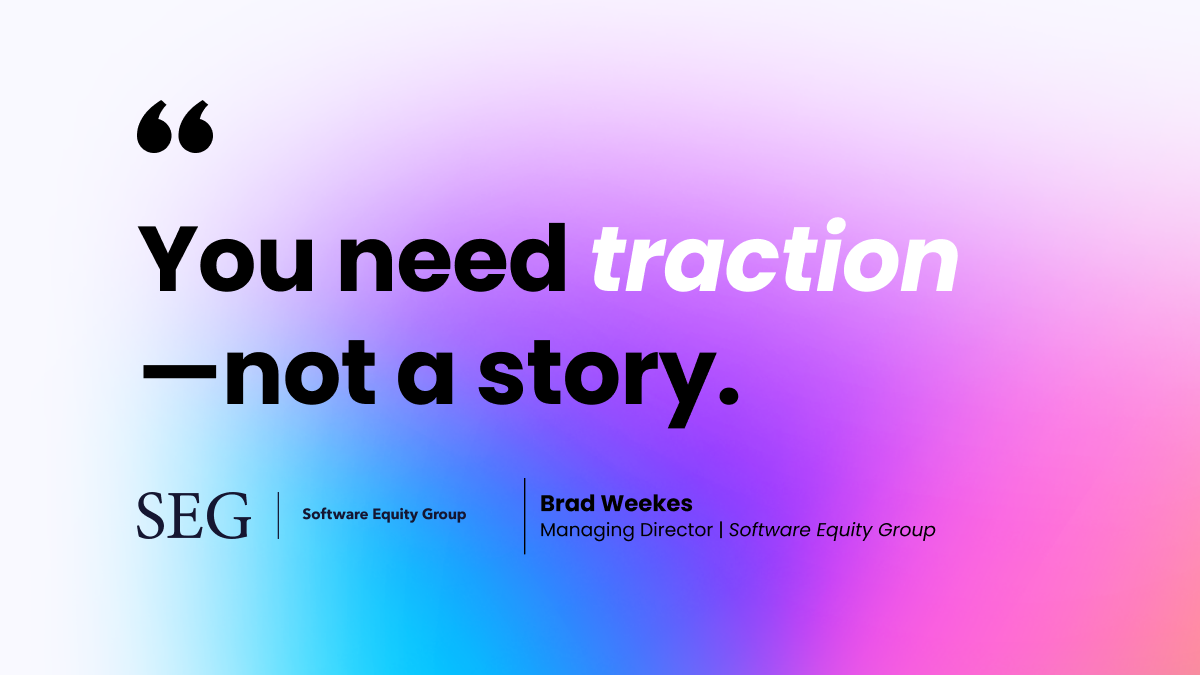
“You need traction—not a story.”
When it comes to customer adoption, that’s where timing really matters. Brad stresses that traction matters more than vision. He warns that buyers will discount “story-only” opportunities.
Beyond payments, fintech offerings like lending (marketplace-driven) and insurance (growing quickly) are emerging as additional value drivers. But, payments still remain the most proven and scalable entry point.
If you’re a vertical SaaS founder starting or evolving your payments and embedded fintech offerings, Brad suggests you keep a few payment-specific KPIs in mind.
Payments-Specific Metrics:
- Payment penetration (critical)
- Total payment volume (TPV)
- Net take rate trends
- Cohort adoption over time
Common Mistakes Founders Make
When embedding payments into your product to boost valuation and increase exit opportunities, there are a few simple mistakes you can easily avoid.
Brad has seen founders say, ‘‘we’ll just plug in payments here,” but he cautions it’s not that easy. There’s a lot underneath the hood. Here’s Brad’s quick guide to common payments mistakes and how to avoid them.
Underestimating Complexity
Risk: Payments ≠ simple plug-in
Opportunity: Think through operational, compliance, and go-to-market challenges
Low Penetration Across Customer Base
Risk: Starting too late to gain traction and build strong adoption rates. Reduces credibility. Opportunity: Embed payments early. Draft and execute an adoption playbook.
Treating Payments as a Bolt-On
Risk: Lack of deep workflow integration
Opportunity: Make payments a critical part of the workflow. The stickier payments are, the harder they are to rip and replace.
Why Embedded Payments Increase Company Value
Seeing how embedded payments drive immediate revenue, increase retention, and expand gross profit, it’s no surprise they are a primary driver of value. As Brad notes, embedding payments is effectively “found money” from your existing customer base.
“These SaaS companies find a new revenue stream with payments—often overnight. If they have an existing install base, they flip the switch on payments and NRR goes through the roof, and their gross profit grows dramatically.”
Embedded payments also help deepen product integration and customer retention. Your solution shifts from being a tool to a mission critical system thanks to tightly integrated workflows.
You also unlock new ways to monetize customer activity. The typical SaaS model is usage-based – depending on growth of seats. With embedded payments, you’re opening up possibilities of usage-based and outcome-based pricing.
“Now you have not only the software platform, but payments—which is a critical part of the workflow. Ripping that out becomes much more difficult.”
To ensure you maximize your valuation, Brad suggests you keep a few of these key metrics strategic buyers will scrutinize in mind.
Financial Metrics
- Gross revenue vs. net revenue
- Gross margin of payments stream
- Cost structure (processing, interchange, etc.)
SaaS + Payments Combined Metrics
- Net Revenue Retention (NRR)
- Gross Revenue Retention (GRR)
- Rule of 40
- Gross margin profile
As you build out your embedded payments offering and your overarching pricing models, Brad does caution not to get too creative. He’s seen a few founders over-optimize pricing models (i.e. “free SaaS, monetize only payments’) to the point that it creates a lack of revenue stability and buyer skepticism.
“When you get too creative, you add noise. Buyers start asking, ‘why are you doing this?’ It just creates more questions than value.”
SaaS companies are facing a lot of pressure today as AI takes over that pricing models should be more outcome-based. There’s two sides to that coin because while buyers and investors might find the increased gross profit margin attractive, it’s likely that if you view that revenue stream like an annuity it’s not considered as valuable as contracted SaaS.
When we get a payments company with transaction or usage based activity, we try as much as we can to make it look like contracted recurring revenue. We want this payments revenue stream to look exactly like this recurring SaaS stream. Brad often argues embedded payments revenue is better because the NRR goes through the roof compared to contracted SaaS, which is limited by price increases that are CPI basis.
Tracking these metrics isn’t just good hygiene — it’s how you build a credible exit narrative. To make it easier, we put together a Payments Cohort Analysis Template you can use to track payment penetration rates, TPV trends, net take rate, and cohort adoption over time. It’s built around the exact data points acquirers will ask for.
Download the Payments Cohort Analysis Template →
Key Takeaways for Vertical SaaS Founders
- Payments can materially increase enterprise value
- Traction > vision when it comes to valuation
- Multiples can vary dramatically — working with an investment banker who understands embedded payments and can shape the narrative around your payments business may significantly improve your outcome
The best model combines:
- SaaS stability
- Payments upside
- Deep integration beats surface-level add-ons
- Start early — but execute thoughtfully
Ready to Build Payments Into Your Platform?
Brad’s advice is clear: the window to get ahead of this is now. Payments aren’t a feature you add when you’re ready to sell — they’re the infrastructure that makes your platform worth buying.
If you’re a vertical SaaS company looking to embed payments the right way — with the workflow integration, compliance backbone, and financial infrastructure that actually moves the needle on valuation — that’s exactly what Payabli is built for.